Despite recent price increases and concerns over the economy, the majority of consumers consider streaming television to be one of the better values for their entertainment dollar. On the downside, there continues to be indications of long-term concern for the economic value of the theatrical movie business.
These findings are from Hub Entertainment Research's 2025 "TV Advertising: Fact vs. Fiction" report, based on a survey conducted among 3,000 US consumers age 14-74, who watch at least one hour of TV per week. Interviews were conducted in May 2025 and explored consumers' attitudes toward advertising, how it differs across video platforms, and how ad strategy affects viewer engagement.
The State Of The Economy
Hub has been asking respondents about their concerns over the economy since the fall of 2022. But between November 2024 and May 2025, there was a significant increase in the number of consumers who are very concerned about the economy overall, and specifically about the rate of inflation and the possibility of a recession.
In response to those economic concerns, viewers are reconsidering their video spending, but so far that is primarily reflected into a willingness to consider new subscriptions that cost less but include advertising.
The Perceived Value Of Streaming
But when viewers are then asked to consider video subscription costs in the larger context of all entertainment alternatives, TV proves to be more resistant to cost-cutting than other activities.
More than half of TV viewers would consider spending more on video subscriptions if it meant they could reduce spending on other entertainment.
The reason viewers are willing to spend more on TV and movie streaming subscriptions is they perceive them to be a better value than all of the other entertainment alternatives considered, apart from vacations.
That perception is especially challenging for the theatrical movie business, given that more than 1/4 of all respondents consider seeing a movie in a theater as a "poor value."
When asked to specifically consider reducing spending on entertainment sources in the next year, streaming subscriptions are near the bottom of the list to be cut.

A Higher Tolerance For Advertising
Hub Research shows that Viewers' tolerance for TV advertising continues to grow, with the percentage of self-described "ad intolerant" viewers dropping from 17% four years ago to only 11% in the latest survey.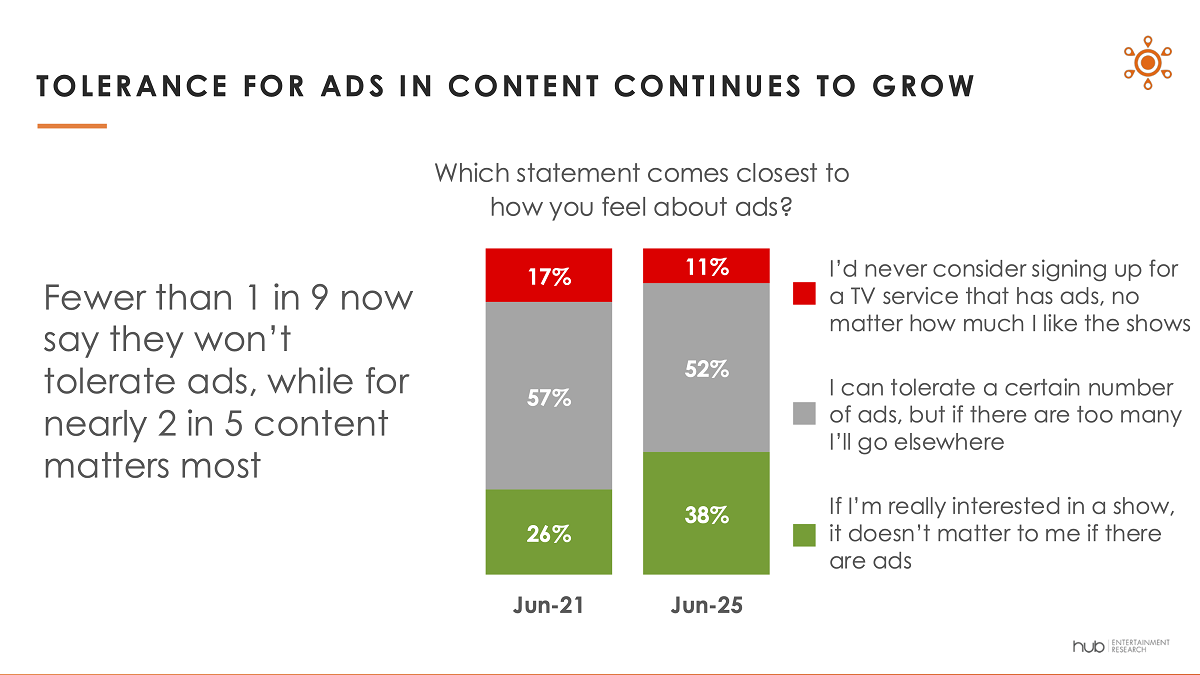
And over the past three Hub Research studies, there has been an increase among those who say they can't tolerate ads expressing preference for saving $4-5 per month on subscriptions with ads over an ad-free service at a higher price.
The Rise Of Aggregators
Half of all viewers use an aggregator to organize their streaming subscriptions, and among viewers age 18-34 that figure rises to six in 10. Those aggregators include Amazon Channels, YouTube and Roku.
One interesting datapoint is that consumers who use an aggregator for their subscriptions have a considerably higher number of TV subscriptions. Nearly six in ten of those using an aggregator have six or more video subscriptions.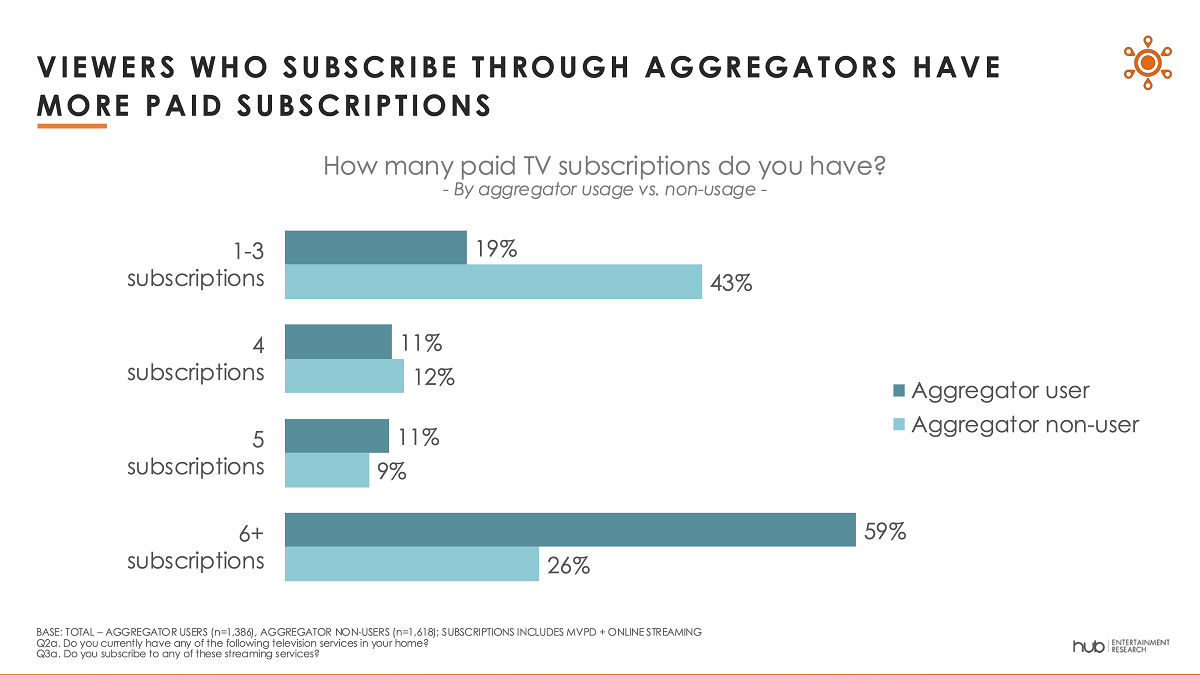
On the other hand, 43% of those who do not use an aggregator have three or fewer subscriptions.